
These are 'hidden champions' of strategic research and innovation. They are worthy of emulation within Indian industry, and maybe even a Padma!, notes R Gopalakrishnan.

The question is no longer whether the war will expand. It has. The next few days will tell us whether the war stabilises around Hormuz or whether the Strait itself becomes the trigger for a far larger rupture. What to watch for over the next 48 hours is simple: Any move by the US toward direct naval control of the Strait; any credible Iranian attempt to disrupt or mine shipping lanes and, critically, whether energy infrastructure in the Gulf continues to be targeted.If those lines are crossed in tandem, the war will no longer be containable within the region.

India took another leap in space infrastructure with the foundation stone laid for a new launch pad at the country's second rocket port in Kulasekarapattinam.

Ola Electric is moving the delivery for the first batch of its electric scooters to between December 15 to the end of the month, a two- to four-week delay from its earlier schedule, due to a shortage of chipsets and electronic parts. The first batch of deliveries were scheduled for November 30 but the company decided to delay them after a meeting between its factory team and the global supply chain on Saturday. It became clear that the late delivery of chips and electronic parts was only 'getting worse', sources told Business Standard. Ola has apologised to customers for the delay and said it is "ramping up production as fast as we can so that you can get your Ola S1 at the earliest". It has stopped taking any new bookings until the chip shortage has eased, say sources.

India is not reaping the benefits of demographic dividends, former RBI governor Raghuram Rajan said on Tuesday, emphasising that there is a need to focus on improving the human capital and enhancing their skill sets. "I think we are in the midst of it (demographic dividend), but the problem is we are not reaping the benefits," Rajan said at a conference on "Making India an Advanced Economy by 2047: What Will it Take" at the George Washington University in Washington DC. "That's why I said 6 per cent growth.

The 2025 US National Security Strategy marks a major pullback, with America turning backward and effectively allowing China greater dominance in Asia. while long-time partners like India are left to face an increasingly unstable global order largely on their own, observes Rajeev Srinivasan.

Quarterly earnings, macroeconomic data announcements and global trends will drive the Indian stock markets in a holiday-shortened week, analysts said. Stock markets would remain closed on Wednesday for the Guru Nanak Gurpurab holiday.

Essential and strategic items such as pharmaceuticals, semiconductors, copper, and energy products like oil, gas, coal and LNG are exempted from the 27 per cent import duty announced by the US on Wednesday, according to think tank GTRI.

'The petrol lobby is very rich and strong.'
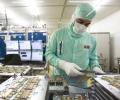
Mumbai-based Indian Semiconductor Manufacturing Company (ISMC) and Singapore-headquartered IGSS Ventures have one strategy in common: They have told the government in their application for semiconductor fabrication plants that they will export the bulk of the chips they make in India in the initial five or 10 years. The third applicant, Vedanta-Foxconn, which is also building a fab plant, has said it will concentrate on the needs of consumer electronics and mobile device markets, and earmark 80 per cent of output for domestic consumption, but has not specified its customers. Finding a viable domestic market could well be the biggest challenge for India's renewed tryst with semiconductors. Fab plants do not sell directly to end users but to intermediary chip design companies - such as Qualcomm or MediaTek.

Chinese envoy Xu Feihong stated that China opposes the US imposing tariffs on India, amidst a thaw in Sino-India relations and concerns over global trade disruptions.

Indian plants -- who plan to begin production with 28 nano metre chips -- will take two to four years to get off the ground. By that time, in the fast changing world of chip making, the global market would have shifted to 22 nm.

India, the world's fourth largest economy, is set to maintain the 'goldilocks' phase with tailwinds of good growth, low inflation and robust banking performance as well as reform initiatives poised to sustain the economic pace witnessed during 2025.

Tata Motors recently cut the sales forecast of its luxury car brand, JLR, due to chip shortages, scaling down its production numbers from the earlier 120,000 units to 60,000-65,000 units by September, and leading to an almost 10 per cent fall in the company's stock. In May this year, Bosch India, too, had stated that chip shortfalls would impact its production, as supply chains were getting disrupted.

You can add it to your kid's lunchbox or have with your chai.

According to World Population Review 2025 data, United States eats the most cheese in the world. It also the world largest cheese-producing country. In 2022 it manufactured 6.4 million tonnes of the world's output of 22.6 million tonnes of cheese in the same year.

'India needs many more job creators, both in manufacturing and services, to make it big.' 'For that, the red carpet must be rolled out fully and for all investors without holding back,' suggests Nivedita Mookerji.
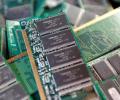
Even as India's passenger-vehicle sales touched a record high of 3.9 million units in 2022-23, growing 27 per cent over the previous financial year, the country's largest carmaker, Maruti Suzuki India (MSIL), said on Monday uncertainties in the electronic-component supplies might affect production in FY24. MSIL said the shortage of electronic components had some impact on production in FY23. "The company took all possible measures to minimise the impact.
Time was when you turned on your car's ignition, all that happened was that the mechanical system fired up your engine and made it run. Today, the moment you do so, your stereo system probably lights up, connects to the Bluetooth on your smartphone, and lets you make calls through an audio assistant or play music from your phone, which you can hear on the car's speakers. All these smart features in a car are powered by semiconductors, or chips, as they are commonly called.
Foundries in Taiwan account for more than 75 per cent of the chips that mobile devices made in India need, according to estimates by the Indian Cellular and Electronics Association (ICEA), which represents global and domestic manufacturers. The number is slightly lower, 60 per cent, if one considers all chips -- those of consumer electronics, PCs, laptops, autos, etc. This ties in with the fact that foundries in Taiwan, led by TSMC, account for over 70 per cent of the world's microchip supply, according to estimates by Gartner.

'An asset must generate income. Equities yield dividends, bonds pay coupons, deposits give interest, and real estate earns rent.' 'Gold, silver, and even Bitcoin produce no income, they merely store value. So, they should not be compared to productive assets.'
Mining mogul Anil Agarwal-led Vedanta Resources' credit profile will unlikely be weighed down by the group's planned Rs 1.54 lakh crore foray into semiconductor manufacturing, S&P Global Ratings said on Monday. "This is because the company has reiterated that the $20 billion related investment will be carried out outside of Vedanta Resources. "The business will be undertaken in a separate entity under Vedanta Resources' holding company Volcan Investments Ltd," it said.

...compared with 153,000 in all of 2024.
From powering mobile devices, US chip designer Qualcomm has tied up with Ola Electric to power its electric scooters. Qualcomm is providing the key 4G connected octa core android platform which provides connectivity, computing capabilities and enables rich immersive displays with power saving software.
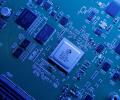
Indian conglomerate Vedanta has earmarked $15 billion for foray into the electronic chip and display manufacturing space, and plans to scale up the investment to as much as $20 billion, a senior company official said. Vedanta's group firm Avanstrate, which will spearhead the semiconductor business, expects to roll out electronic chips and displays from Indian manufacturing plants by 2025, the official of the group's semiconductor arm said on Friday. "Semiconductor is a long-term business. We are looking at about $10 billion on display.

Amid better semiconductor chip supplies, the Indian automotive industry posted an 8 percent growth in production of vehicles across categories for the month of May, with three-wheelers (20 per cent) and passenger vehicles (16 per cent) leading the pack. Exports, however, dipped 21 per cent at an industry level. The industry also recorded its highest-ever May wholesales of domestic passenger vehicles (334,802 units), riding on high demand for sport utility vehicles (SUVs) and better supplies of semiconductor chips.
Indian conglomerate Vedanta on Monday said it has signed a pact with electronics manufacturing services giant Foxconn to form a joint venture (JV) for manufacturing semiconductors in India. Vedanta is the first company to make the announcement to invest in semiconductor manufacturing after the government announced a Rs 76,000-crore programme to boost electronic chip and display ecosystem in the country. This is also the second attempt of Vedanta to enter the semiconductor space after its earlier plans to set up a display unit with about Rs 60,000 crore investment could not take off.
US chipmaker Advanced Micro Devices (AM) on Friday announced a $400 million investment in India over the next five years and said it will build its largest design centre in Bengaluru. AMD chief technology officer Mark Papermaster made the announcement at the annual semiconductor conference in the presence of Prime Minister Narendra Modi. Undeterred by Taiwan's Foxconn pulling out of his group's $20 billion semiconductor-making venture, mining baron Anil Agarwal said the first phase of Vedanta's chip-making project will be ready in two-and-a-half years.

World's largest chip maker Intel deferred on Wednesday its decision to make India as a destination for semiconductor manufacturing as the government was slow to announce policy. Readers are requested to send their opinions on the issue.

The point to note for India is that we must not panic. The United States may be our largest export destination, but high tariffs will not exactly mean gloom and doom. Sure, we can throw some morsels as we continue negotiating, but we must be firm that some red lines cannot be crossed, no matter what, asserts Shreekant Sambrani.

NavIC consists of a constellation of seven satellites and a network of ground stations and is touted to be more accurate than GPS.
India and Vietnam are vying with each other to woo semiconductor companies to their country. With the tension between the US and China escalating, and Taiwan getting vulnerable both countries are trying to present themselves as alternative destinations for global players. Vietnam, which started the effort as early as 2010, has got a leg-up after US President Joe Biden's visit last month.

They are both electronic manufacturing services (EMS) companies, also known as contract manufacturers. One is Taiwan's Foxconn group, the undisputed global number one in this business with revenues of $223 billion. The other is Dixon Technologies, the biggest domestic player with revenues of over Rs 10,500 crore.
It is too late to devote resources to chip manufacturing. India, instead, should explore opportunities in solar energy, where entry barriers are low and end-products are sold like commodity, states a JP Morgan report.
'I think that kind of change is coming. We should stay prepared for that change, whichever industry or sector we are in, we must be prepared.'

Semiconductor makers need thousands of engineers and technicians, and though India has one of the largest pool of engineers in the world, they do not have experience in the semiconductor manufacturing space.
As many as 18 out of the top 25 chip companies are setting up chip design centres in India,
The global semiconductor shortage is turning into a headache for automotive (auto) and appliance manufacturers. But it is proving to be a boon for equity investors. Semiconductor stocks are among the best performers this year. The PHLX Semiconductor Index has gained more than 35 per cent year-to-date.

Stock markets are in for an event-heavy week ahead with a raft of Q1 earnings from blue-chips, the US Fed interest rate decision and foreign investors trading activity driving investors' sentiment, analysts said. Macroeconomic data announcements, monthly auto sales numbers and global market trends would also guide movement in the domestic equities, they said.

With inflation comfortably below the Reserve Bank of India's (RBI's) 4 per cent median target and likely to undershoot its 3.7 per cent projection for 2025-26 (FY26), there is room for the monetary policy easing cycle to be sustained, the Finance Ministry said on Monday. The comments, featured in the ministry's Monthly Economic Review for June 2025, assume significance ahead of the Monetary Policy Committee (MPC) meeting of the Reserve Bank of India (RBI) scheduled to begin from August 5.
